Storing Folded Fabric to Reduce Wear
A shelf, drawer, or storage box can each suit folded fabric. Choose by checking the textile, the storage space, and how often you handle it.
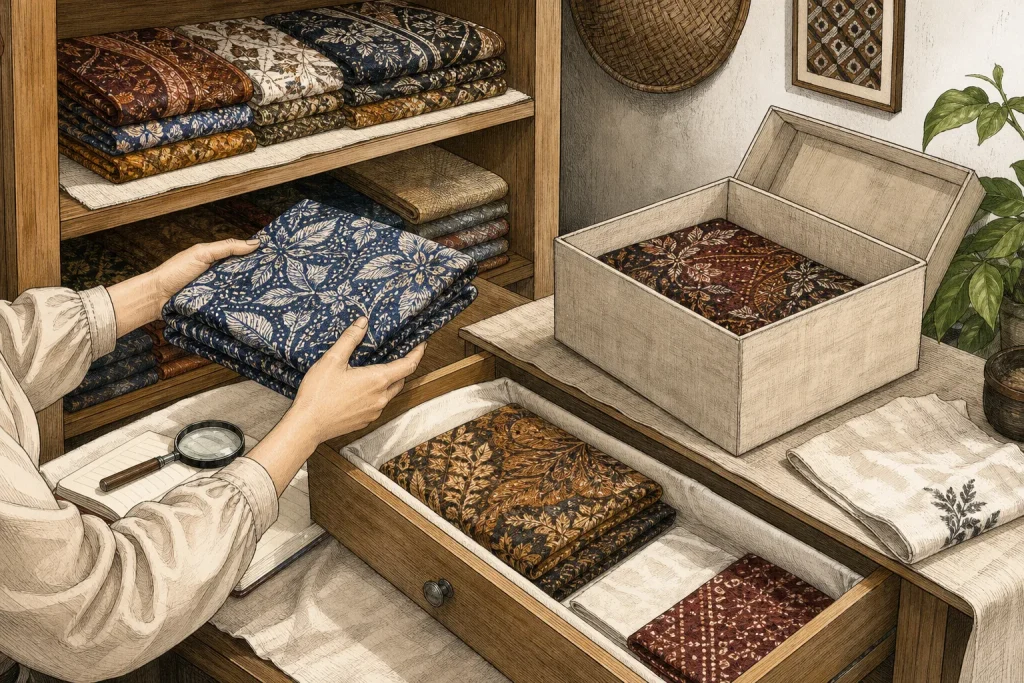
A shelf, drawer, or storage box can each suit folded fabric. Choose by checking the textile, the storage space, and how often you handle it.
Care · 9 min read
A folded length of batik can look settled on a shelf and still bear strain along the same sharp creases each time you reach for it. Dust, dampness, crowded stacks, and hurried handling can all complicate its care. Choosing a suitable resting place—and lifting the cloth with support—makes storage easier to manage.
There is no single best place for every textile. An open shelf keeps fabric visible, a drawer provides a barrier from ordinary room dust, and a box can help protect pieces used less often. Choose by inspecting the cloth, the room, and your handling habits before buying special equipment.
Check the textile and its surroundings first
Before putting fabric away, look for visible dirt, food residue, dampness, or an unusual smell. Such signs can make storage more complicated: residue may be difficult to address later, while moisture can encourage mustiness or affect the cloth. These risks depend on the material, its condition, and the storage environment, so treat a visual check as a prompt to use care, not as a diagnosis. If a textile has been washed, let it dry completely before storing it.
For a delicate, valuable, or historically significant piece, ask a textile conservator or qualified specialist about cleaning and storage. Avoid trying a treatment at home when you are unsure how the dyes, fibers, or prior repairs may respond.
Inspect the room as well. Prefer a place that stays dry and reasonably stable, away from leaks, condensation, direct sunlight, heaters, and kitchen fumes. Bright light can fade color. A cupboard against a wall with persistent dampness may expose fabric to moisture even if the cupboard looks sheltered. If the room smells musty or shows signs of damp, choose another place and address the underlying issue.
Finally, consider how often you use the textile. A piece brought out regularly should be easy to reach without pulling on a stack. One used only occasionally may suit a protected drawer or box, provided you can check it from time to time. Storage should make careful handling easier, not turn retrieval into a rescue.
Use a shelf when visibility and access matter
A shelf can suit someone who rotates fabrics often and has a clean, dry room with limited dust. It works best when the textile is sturdy enough for routine handling and the shelf is away from windows, heating sources, falling objects, and places where people brush past it.
Open shelves collect dust and expose fabric to room light. Check the intended spot at different times of day. If direct sun reaches the shelf, move the fabric or choose a drawer or box. If the shelf is rough, use a clean, undyed cotton cloth as a buffer rather than setting the textile on an abrasive surface.
Choose a smooth, clean shelf wide enough to support the folded fabric without letting its edges hang. Keep the stack low enough to lift without tugging at the bottom piece. Place frequently used textiles on top or in an easy-to-reach position. Lift with both hands, supporting the folded body, and set the cloth down rather than dragging it across the shelf.
Use a drawer when you want a dust barrier
A drawer may suit a sewing area or shared room where shelves collect dust or are exposed to household activity. Check it before adding fabric: look for dampness, strong odors, rough edges, splinters, or anything that could snag the cloth. If you find any of these, do not put the textile there; resolve the issue or choose another location.
A clean, undyed cotton lining can provide a buffer if the drawer base is rough. Avoid paper that might transfer ink or color. Do not pack the drawer so tightly that the fabric is wedged against its sides. Leave room to grasp and lift each piece without pulling it free from beneath other items.
A drawer is not automatically a safer choice than a shelf. If it is near a leak, a radiator, or a persistently damp wall, choose another spot. Open it periodically to check the fabric and the space. If a crease has remained sharply compressed, refold the textile with the folds in different positions when its condition allows; seek specialist advice before handling a fragile or significant piece.
Use a box for textiles you handle less often
A box can keep dust and routine household handling away from a textile that is not needed often. Choose a clean, dry container with no strong odor, and make sure it supports the fabric without forcing it into a tight fold. For fragile or culturally significant textiles, ask a conservator which materials and methods suit the particular object; ordinary household products may not be appropriate.
Avoid sealing fabric in plastic or an airtight container if you cannot be sure it is completely dry, or if condensation may form. A closed box can conceal changes, so label it clearly and make a habit of opening it for a visual check. If you notice moisture, a musty smell, insect activity, or a change in the textile, remove it from the box and seek suitable advice before treating the fabric.
Keep heavy objects off the lid, and avoid stacking boxes so high that you must pull a lower one out by a corner. The container is useful only if you can lift and open it without scraping or dropping its contents. A box is often less convenient for a textile used regularly because each retrieval adds handling.
Let the evidence guide the storage choice
Use these checks to choose among a shelf, drawer, and box. Each observation points to a decision and an alternative action:
- Direct sunlight reaches the shelf: If sunlight falls on the textile, choose a drawer or box away from the window; otherwise, the shelf remains an option if it is clean and dry.
- The shelf is rough or narrow: If it could snag the cloth or leave fabric unsupported, use a smooth shelf with a clean, undyed cotton buffer, or choose a suitable drawer or box; otherwise, use the shelf without dragging the textile.
- The drawer has dampness, a strong odor, or rough edges: If any sign is present, choose another location and address the problem; if the drawer is clean, dry, and smooth, it can be considered.
- The drawer is too shallow or crowded: If fabric would be compressed or difficult to lift, use a roomier shelf or box; otherwise, arrange the most-used pieces near the top or front.
- The textile is used only occasionally: If a clean, dry box can support a relaxed fold and remain accessible for checks, use it; otherwise, choose a suitable drawer or shelf that is easier to revisit.
- The box may trap moisture or is difficult to reach: If the fabric is not fully dry, the container may collect condensation, or retrieval would require pulling or scraping, do not use that box; choose a clean, dry drawer or shelf instead.
- The textile is fragile, valuable, or historically significant: If its condition or materials are uncertain, pause home cleaning and ask a qualified textile conservator about handling and storage; otherwise, follow cautious household practices suited to the fabric.
Lift and refold without pulling at creases
Use a clean surface and smooth the fabric gently with your hands rather than pressing hard along one line. When practical, vary the fold positions as you refold it so the same crease does not remain in exactly the same place indefinitely. Broad folds are often easier to support on a large length than a tight, rigid fold.
Before opening a textile, clear a space. Lift it with both hands and let its weight rest across your forearms or a clean table rather than pulling at one corner. If it is wide or heavy, ask another person to support the far end.
Before returning it to storage, check for pins, clips, or other objects that could catch the fabric, and make sure it is dry. For loose dust, choose only a method suitable for the textile. Do not brush, vacuum, or wash a fragile or valuable piece without specialist guidance.
Worked hypothetical example: batik in a small sewing room
Imagine a person with one fully dry cotton batik length used occasionally for sewing. Their small sewing room has an open shelf near a window that receives daylight, a clean but shallow drawer, and a dry closet with space for a clean, breathable box. These are hypothetical details, not a record of an actual textile or storage trial.
First, they rule out the shelf because light reaches it. Next, they rule out the drawer because the length would have to be squeezed into a tight fold. They choose the box because it supports a relaxed fold and fits on an accessible closet shelf away from heat and damp. They label the box, place the textile inside without forcing the folds, and make sure the box can be opened for occasional checks. When they want to sew, they clear a table, lift the cloth with both hands, and refold it along different lines before returning it.
The resulting choice trades easy visibility for less exposure to room light and dust. If the closet later smells musty or the box shows moisture, they stop using that location and move the textile to a clean, dry alternative while seeking specialist advice if the cloth appears affected.
Make storage easy to revisit
Storage is not a one-time arrangement. When you take out a textile, notice whether the shelf is dusty, the drawer feels crowded, or the box has picked up an odor. If the storage spot has changed—for example, after a leak or the addition of a heater—check whether it is still suitable and move the cloth if needed.
Keep labels on the shelf, drawer, or box rather than attaching them directly to the fabric. A simple note can help you find a piece without unfolding several others. In a shared craft space, agree on a few habits: return textiles dry, lift rather than drag, and leave the storage place ready for the next person.
When a textile comes out for display or use, choose storage according to its next purpose. A frequently handled length may suit an accessible, shaded shelf; a piece set aside for occasional use may suit a box that is easy to inspect. If the textile is especially delicate, valuable, or meaningful to a family or community, treat general household advice as a starting point and consult a qualified textile conservator about care suited to its materials and condition.
The gentlest option is usually the one that supports the fabric without forcing it into a space that does not fit. Give it a clean, dry resting place, lift it with care, and revisit the folds and surroundings as your routine changes.
Related reading

How Place Shapes a Textile Tradition
Learn to read a cloth through the materials, weather, work, and local habits around it, without…
Building an Outfit Around a Patterned Textile
A prominent textile can lead an outfit without overwhelming it. Learn how to balance pattern scale,…